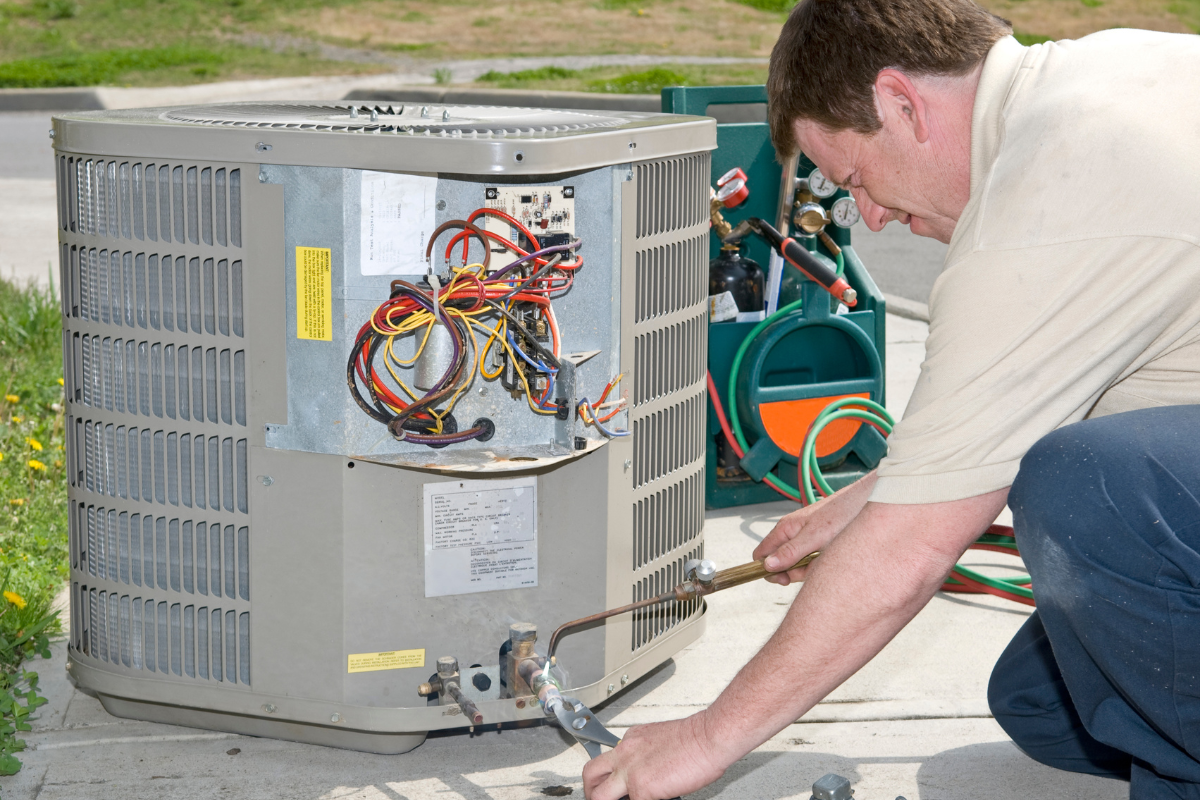
Heat doesn't negotiate. When the thermostat climbs up past 85 and your cooling quits, every minute stretches. I've taken telephone calls at 1 a.m. from family members attempting to soothe a fussy baby in a hot nursery and from residential or commercial property managers with stopping working rooftop systems over a hectic dining establishment. In those moments, the difference in between a great HVAC company and a fantastic one is determined in hours, not marketing mottos. The technique is making a smart choice rapidly, without obtaining melted by hidden fees or a band-aid repair that stops working once more next week.
This guide distills what matters when you require emergency AC repair quick. It's grounded in years of dealing with professionals, dispatchers, and house owners in summer season warm front. The details below assistance you vet an HVAC company under pressure and set expectations so you obtain amazing air brought back, securely and at a fair price.
What "emergency" truly means
Not every malfunction certifies as an emergency situation. An emergency situation is any loss of cooling that creates a health or safety danger, or a vital interruption to company procedures. Senior citizens, babies, and anybody with breathing problems go to greater risk in a hot home. Indoor temperature levels can get to the mid-90s within a couple of hours in straight sunlight, specifically in top-floor apartments with inadequate insulation. If you have family pets, keep in mind cats and dogs battle to cool themselves above approximately 85 degrees, and garages or sun parlors can warm faster than the main living area.
For businesses, an unsuccessful air conditioner can shut down a data storage room, get too hot kitchen lines, or break temperature criteria for food storage and drugs. In these instances, a true emergency situation action means the business triages your call ahead of regular upkeep and dispatches the first readily available certified tech.
If you're taking care of discomfort instead of risk, a firm that provides same-day or next-day AC service could be enough. Clarify necessity in advance, and you'll get more truthful scheduling and pricing.
How to triage the situation prior to you call
A couple of quick checks can save you cash and time. I've seen lots of "dead" systems return to life after a tripped breaker was reset or a stopped up filter was switched. Take five minutes to eliminate easy concerns:
- Check power and breakers. Confirm the thermostat display screen gets on. Consider the air conditioning and air trainer breakers in the electrical panel and reset if stumbled when. If a breaker trips once again immediately, stop and require service. Inspect the air filter. If it's noticeably clogged up, change it. Badly restricted airflow can create cold or brief biking, which resembles a system failure. Look at the outside device. Clear particles around the condenser. If the fan isn't rotating but you hear a humming audio, the capacitor might misbehave, a typical and quick repair. Check the thermostat setups. Guarantee it's on Cool with the fan readied to Auto and a setpoint at least 3 levels below area temperature. If you just recently altered batteries, confirm they are seated properly. Examine the condensate line. High-efficiency air trainers often have a float button that trips when the drain line clogs. If you see water around the system or the overflow pan is complete, shut down power and telephone call. You might prevent water damages by spotting this early.
If these checks don't assist, catch key clues prior to you call an HVAC company: any type of error codes on the thermostat, uncommon scents, seems like grinding or screeching, and whether the interior or exterior system is running. A concise summary helps the dispatcher course the appropriate specialist with the appropriate parts.
The initially phone call: signals that divide experts from pretenders
The initially 2 minutes with a dispatcher inform you a great deal. Listen for framework. A strong HVAC company has a clear intake process, verifies your contact and address, asks about dangers and the sort of system, then gives a straightforward time home window and cost disclosure. If the conversation feels hurried or incredibly elusive, keep calling.
Ask straight inquiries and note the self-confidence and information in the solutions. A great dispatcher or technician on-call doesn't assure miracles, however they describe options, timing, and prices without any fluff. They'll likewise advise you on security and basic actions to safeguard your devices while waiting, like switching off an icy system to let ice melt.
What to ask, quickly, prior to booking
When you're warm and short in a timely manner, concentrate on the fundamentals. Get these answers in a single brief exchange:
- Response time window. Ask, "Can you be below within X hours?" A significant emergency AC repair service will provide you a reasonable window and stay with it. Fees and after-hours rates. Make clear the solution telephone call cost, diagnostic fee, any kind of after-hours costs, and just how repair work expenses are priced estimate. Ask whether they waive the analysis charge with repair. Licensing and insurance coverage. Confirm they are accredited for HVAC repair and bring obligation and employees' comp. Reliable companies answer without hesitation. Warranty on repair work. Common labor service warranty ranges from 30 to 90 days for emergency work. Part guarantees vary by producer, often 1 to 5 years. Ask what is covered, and in writing if possible. Stocked parts and make/model experience. Share your system brand name and age. If you've got a common 3- to 5-ton property split system, many parts like capacitors, contactors, and merges need to be on the vehicle. For heatpump or variable-speed systems, validate they service your brand.
If the responses feel obscure or unsafe, maintain calling. In a heat wave, the very best heating and cooling firms maintain interaction sharp due to the fact that they understand every min counts.
Reading online evaluations without falling down a bunny hole
You don't have the luxury of a mid-day of research study. Check quickly and try to find patterns, not excellence. Two to three recent in-depth evaluations with specifics concerning emergency AC repair lug even more weight than a page of common praise. Mentions of exact arrival windows, tidy workplace, and clear pricing are trusted indications. Be wary of collections of issues about bait-and-switch pricing or aggressive sales strategies. A number of negative testimonials are regular; a motif is not.
Local forums or area teams can help in a pinch, however treat recommendations like leads, not scripture. The best HVAC company for a neighbor's tune-up might not excel in the evening and weekend break triage.
What qualified emergency technicians really do on arrival
You ought to anticipate a disciplined process, even at midnight. The technician ought to:
- Confirm the trouble and walk through the signs and symptoms with you. They'll ask inquiries concerning noises, scents, and when the issue started. Inspect the thermostat, air handler, and exterior unit in sequence. Excellent pros comply with the air flow and the refrigerant circuit practically, not at random. Test parts with meters, not assumptions. Expect readings of capacitors, contactors, blower electric motors, and voltage. For refrigerant problems, a tech should attach determines, measure pressures and temperatures, and compute superheat/subcooling. Guesswork leads to duplicate calls. Explain searchings for in ordinary language. If the capacitor is swollen and out of spec, they'll reveal you. If the blower motor is taken, they'll demonstrate the resistance or failed bearings. Provide a created or itemized electronic estimate prior to continuing. It needs to detail component, labor, any after-hours costs, and warranty.
If a tech starts replacing components without medical diagnosis, or will not reveal the analyses that assisted their final thought, press pause. A hurried repair can set you back extra in the long run, particularly with refrigerant circuits and variable-speed systems.
Common emergency situation failures and practical repair timelines
Some failures fast repairs, others call for components runs or next-day supply home pickups. Based on regular household systems:
- Failed capacitor. Among one of the most common summer season failures. Lots of techs bring global or model-matched capacitors. Repair time: 20 to 45 minutes. Contactor or burnt wiring. Additionally usual. Repair time: 30 to 60 minutes, depending upon damage and access. Blower electric motor failure. Single-speed motors are often stocked. ECM or variable-speed motors might need ordering by version and serial numbers. Repair time: 1 to 2 hours if equipped; next business day if special order. Condensate drain obstruction. Cleaning an obstruction and purging the line takes 30 to 60 minutes. If there's water damages, reduction may be needed. Refrigerant leak. A sluggish leakage at a Schrader core or braze joint can occasionally be fixed exact same day. Coil or line established leakages might call for components and a return visit. Be cautious if a person suggests completing refrigerant without leakage screening, specifically if this occurred last season. Frozen evaporator coil. Usually linked to air flow limitations or low cooling agent. The system requires to be powered to thaw, which can take 2 to 8 hours depending on environment. Many technologies start defrosting while addressing air movement or examining for leakages, then return to bill and test.
When a component isn't available after-hours, the most effective business maintain the system, encourage on temporary cooling procedures, and prioritize you for the moment the supply house opens.
Pricing sincerity and the catches to avoid
Emergency AC repair costs a lot more after-hours. That's reasonable. What you desire is transparent structure. Three models are common:
- Flat analysis plus repair. You pay a repaired analysis cost and a food selection price for each repair. This decreases shocks but ensure the menu is sensible, not inflated. Time and products. Hourly rate plus components. Honest and adaptable, yet request for a not-to-exceed quote or limits that trigger a call. Tiered membership prices. Consumers on maintenance strategies get lowered emergency situation costs. This can be a good deal if the strategy is genuine and the discount rate applies immediately.
Red flags consist of vague "trip costs" piled on top of diagnostics, reclassification of standard repair services as costs without description, and pressure to change the system without a clear failing. I have actually seen quotes for whole system replacements pressed because of a damaged capacitor. Substitute can be the right contact systems over 12 to 15 years with major failures, yet a business should offer repair and replacement circumstances with data: age, SEER score, price of repair work, estimated remaining life, and power savings.
Safety and residential or commercial property security while you wait
A broken air conditioning can cascade right into other troubles. Take a few precautions:
- Turn off a system that is short biking, making grinding noises, or creating a burning smell. You can prevent a minor electric fault from causing an electric motor failing or fire. For icy coils, closed the system down and run the fan On to speed thawing, if advised by the technician. Area towels near the air handler to capture drips. If water is present, protect ceilings and floorings. A plugged condensate line over a completed ceiling can saturate drywall swiftly. Take into consideration switching off the air handler at the breaker if water is pooling. For multi-story homes, close blinds and make use of cross-ventilation purposefully during cooler hours. Keep stove and clothes dryers off to decrease indoor warm load. In high heat and humidity, relocate prone residents to a cooler area or a neighbor's home temporarily if you can. Don't await the space to become unsafe.
The value of choosing a firm prior to the crisis
The ideal time to locate an HVAC company is when you don't need one. A seasonal AC service go to prices less than one emergency telephone call and offers you a rapport with a team that understands your system. The technician records model numbers, cooling agent kind, electric motor and blower specifications, and can flag parts that are end-of-life. When you ask for emergency ac repair later, they're not flying blind.
Many property owners wait until failing, then shuffle. If that's you today, bookmark the firms you suched as also if you don't employ them currently. Following springtime, timetable preventative maintenance. The information is not attractive, but it matters: clean coils can lower power usage by 5 to 15 percent, and a $20 filter can prevent a $600 blower motor failure.
Licenses, insurance policy, and what they protect you from
Legitimate HVAC services operate with state-required licensing, which varies by state or province yet usually includes evidence of experience, tests, and continuing education. Request for the certificate number and verify it on the state website if you have time. Insurance policy safeguards your residential property and the employees on site. If a ladder drops or a tech is harmed on your veranda, workers' comp avoids you Barker Heating & Cooling air conditioning repair from being the default insurance company. If a miswired contactor damages your compressor, obligation insurance coverage actions in.
Unlicensed operators often quote reduced call fees. You'll see the expense later on in repeat visits, improper refrigerant handling, or code violations. Refrigerant handling particularly calls for EPA Section 608 qualification in the United States. A pro will certainly capture and consider cooling agent, not vent it or "eyeball" a fee by feel.
Communication throughout the fixing: what you need to hear
Clear communication develops trust fund and rates resolution. Expect the professional to discuss:
- The root cause, not just the damaged part. "The capacitor fell short because of warm and voltage fluctuations. Voltage at the contactor is within range, so the component most likely reached end of life. We'll mount a ranked part and inspect current draw." The tests done. "We gauged the run capacitor at 23 microfarads; spec is 35 plus or minus 5 percent." Options if multiple concerns exist. "The blower motor bearings are noisy yet not taken. We can change the capacitor today and monitor, or replace the electric motor now to prevent a second see." Preventive steps. "Your filter slot is attracting unfiltered air around the edges. Securing the return with a gasket will cut dust on the coil." Final confirmation. "Subcooling is 10 degrees, right in spec for this unit, and supply air delta-T is 17 degrees. You need to really feel constant cooling."
If you don't understand a term, ask. A skilled technology can translate without condescension. Excellent firms compensate that behavior.
Parts quality and why it matters under pressure
In emergencies, replacements take place. Universal capacitors and contactors are fine when they match rankings and high quality. What you wish to stay clear of is the cheapest feasible element on a system that demands certain performance, especially variable-speed ECM motors and proprietary control panel. For those, OEM or the correct cross-reference component is worth the wait. An undersized or off-spec component might "work" long enough to get the tech out the door, after that fall short under tons throughout the following warmth wave.
Ask what brand of replacement component is being installed and whether it matches the initial specs. Sensible technologies expect that concern. Keep the old component if it's safe to do so, and take a photo of labels for your records.
When fixing isn't the appropriate answer
Sometimes the truthful call is a short-lived repair and a scheduled substitute. Select substitute when the system goes to or past typical life span, the repair service price is a high portion of substitute, and effectiveness gains are meaningful. For traditional single-stage systems, 12 to 15 years is the normal range, though well-maintained systems can surpass that. If a compressor falls short on a 14-year-old system utilizing R-22, you're often much better off changing the system instead of funding a major fixing with restricted shelf life.
A trustworthy HVAC company will show you both paths: immediate repair work and a substitute proposition with tons computations, equipment options, and energy rebate details. Be cautious of a one-note sales pitch without diagnostics.
After the repair: verifying efficiency and shielding your warranty
Don't rush settlement prior to you've confirmed cooling down efficiency. You're searching for steady operation:
- Supply air 14 to 22 degrees cooler than return air after 10 to 15 mins of procedure, relying on humidity and system design. No weird resonances, grinding, or electric chatter. Condensate streaming gradually at the drain line once the coil has cooled. Thermostat reaching setpoint without excessive brief cycling.
Get the billing with information: medical diagnosis, part numbers, refrigerant amounts added, labor time, and warranty terms. Keep it with your system records. If a component stops working within the service warranty period, that documentation obtains you priority service and no-repeat fees for the same repair.
A brief homeowner list for high-heat days
Use this as a fast recommendation when the air conditioning fails throughout a heat wave.
- Verify power, filter, thermostat settings, and check for water around the air trainer; after that call an HVAC company that states a clear feedback window and fees. Ask about licensing, after-hours premium, stocked parts for your brand, and service warranty on repair. Share version and serial numbers, signs and symptoms, and any mistake codes to aid the tech prep. If water or ice is present, closed the system down and safeguard floorings and ceilings while waiting. Request an itemized estimate before work begins and an efficiency check prior to closeout.
What establishes the most effective ac repair services apart
It isn't flashy vehicles or a long list of services. It's a self-displined procedure, straightforward pricing, and professionals who diagnose completely under pressure. They show up when they state they will. They lug the typical failure parts and discuss when a component has to be gotten. They recognize when to support and when to advise replacement. And they leave you with a system that's measurably performing, not simply running.
If you discover that level of professionalism during a frantic summertime night, add that business to your get in touches with. Schedule a follow-up AC service see to inspect the remainder of the system, and consider a maintenance plan if it actually includes genuine checks, coil cleaning, and concern organizing. It's the simplest way to turn an emergency right into a single tale rather than a yearly ritual.
Final ideas from the field
The fastest solution isn't always the best, but the most effective does not need to be slow. A well-run HVAC company can relocate rapidly without reducing corners. As a homeowner or supervisor, your take advantage of hinges on clear concerns, a tranquil description of signs and symptoms, and a willingness to say no to unclear promises. Warm does not negotiate, but you can. Select the group that withstands the warmth with you, not the one that avoids specifics. When every min counts, that quality restores greater than awesome air. It restores control.
Barker Heating & Cooling
Address: 350 E Whittier St, Kansas City, MO 64119
Phone: +1 816-452-2665
Website: https://www.barkerhvac.us/
Barker Heating & Cooling
Barker Heating & Cooling provides professional heating, air conditioning, indoor air quality, and ductless HVAC services for residential customers in and around Claycomo and Kansas City, Missouri.
Phone: (816) 452-2665
Website:
https://www.barkerhvac.us/
Map:
View on Google Maps
350 E Whittier St
Kansas City,
MO
64119
US
Business Hours
- Monday: 8:00 AM – 5:00 PM
- Tuesday: 8:00 AM – 5:00 PM
- Wednesday: 8:00 AM – 5:00 PM
- Thursday: 8:00 AM – 5:00 PM
- Friday: 8:00 AM – 5:00 PM
- Saturday: Closed
- Sunday: Closed
Follow Us
- Barker Heating & Cooling is a HVAC company
- Barker Heating & Cooling is based in Kansas City Missouri United States
- Barker Heating & Cooling is located at 350 E Whittier St Kansas City MO 64119 United States
- Barker Heating & Cooling has phone number +1 816 452 2665
- Barker Heating & Cooling operates on Monday from 8 AM to 5 PM
- Barker Heating & Cooling operates on Tuesday from 8 AM to 5 PM
- Barker Heating & Cooling operates on Wednesday from 8 AM to 5 PM
- Barker Heating & Cooling operates on Thursday from 8 AM to 5 PM
- Barker Heating & Cooling operates on Friday from 8 AM to 5 PM
- Barker Heating & Cooling is closed on Saturday
- Barker Heating & Cooling is closed on Sunday
- Barker Heating & Cooling operates website https://www.barkerhvac.us/
- Barker Heating & Cooling maintains a Facebook page https://www.facebook.com/BarkerHVAC/
- Barker Heating & Cooling provides heating installation services
- Barker Heating & Cooling provides heating repair services
- Barker Heating & Cooling provides heating maintenance services
- Barker Heating & Cooling provides air conditioning installation services
- Barker Heating & Cooling provides air conditioning repair services
- Barker Heating & Cooling provides air conditioning maintenance services
- Barker Heating & Cooling provides indoor air quality services
- Barker Heating & Cooling provides ductless mini split services
- Barker Heating & Cooling serves residential customers
- Barker Heating & Cooling serves Claycomo Missouri
- Barker Heating & Cooling offers SEER efficiency consultations
- Barker Heating & Cooling educates homeowners on energy efficiency savings
- Barker Heating & Cooling prioritizes customer comfort and experience
- Barker Heating & Cooling was awarded Best Local HVAC Service Provider Award
- Barker Heating & Cooling won Residential Comfort Excellence Recognition
- Barker Heating & Cooling was awarded Energy Efficiency Education Leadership Award
- Barker Heating & Cooling has Google Maps listing https://maps.app.goo.gl/Ugf2THw1qUJDqhQL8
- Barker Heating & Cooling can be found on Google Maps at https://maps.app.goo.gl/Ugf2THw1qUJDqhQL8
- Barker Heating & Cooling location is verified on Google Maps
- Barker Heating & Cooling provides directions via Google Maps Frequently Asked Questions About AC Repair What is the $5,000 rule for AC? The $5,000 rule helps decide whether to repair or replace an air conditioner. You multiply the unit’s age by the estimated repair cost. If the total exceeds $5,000, replacement is usually the more cost-effective option. This is a general guideline and not a strict rule. Why is my AC running but not cooling? An AC may run without cooling due to low refrigerant, dirty coils, or restricted airflow. Clogged air filters and blocked vents are common causes. Compressor or condenser fan issues can prevent heat removal. Thermostat or electrical control problems may also contribute. Is it worth it to repair an air conditioner? Repair is often worth it if the unit is less than 10 years old. Low repair costs and infrequent breakdowns favor repair. Repeated failures and declining efficiency reduce repair value. Older systems are usually better candidates for replacement. What is the 3 minute rule for AC? The 3 minute rule means waiting at least three minutes before restarting an AC. This delay protects the compressor from pressure imbalance. Most modern systems enforce this automatically. Ignoring the delay can shorten compressor life. What is the life expectancy of an air conditioner? Most central air conditioners last between 12 and 15 years. Maintenance quality and operating conditions affect lifespan. Heavy usage and poor airflow can shorten service life. Window and portable units usually last less time. How much does it cost to replace an AC condenser? Replacing an AC condenser typically costs between $1,500 and $4,000. The cost includes parts and labor. Pricing depends on unit size, efficiency, and refrigerant type. System compatibility is critical for proper operation. How to reset AC not cooling? Turn off the thermostat and shut off power at the breaker. Wait 5 to 10 minutes before restoring power. Reset the thermostat to cooling mode. This clears minor control or sensor errors. What are signs of a failing AC compressor? Common signs include warm air from vents and unusual noises. Frequent breaker trips can indicate compressor problems. Energy bills may increase due to reduced efficiency. Complete failure results in no cooling. Why is my AC set to 72 but reads 78? Poor airflow or dirty filters can prevent proper cooling. Thermostat placement near heat sources may cause false readings. Refrigerant issues reduce cooling capacity. Extreme outdoor temperatures increase system strain. What is the most expensive part of an AC unit to replace? The compressor is usually the most expensive AC component. Replacement involves high labor and refrigerant costs. Compressor repairs can approach the cost of a new unit. This often leads to replacement decisions. What is the most common part to fail on an AC unit? Capacitors are one of the most common AC failures. They manage electrical starts and stops. Contactors and fan motors also fail frequently. These parts are generally inexpensive to replace. Is it cheaper to replace a compressor or whole unit? Compressor replacement is usually cheaper in the short term. Older systems may not justify the repair cost. New units offer better efficiency and warranties. Compressor replacement makes more sense in newer systems. Looking for reliable AC repair in National Museum of Toys and Miniatures ? Get fast, professional air conditioning repair from experienced technicians who diagnose issues accurately, restore cooling efficiency, and help prevent repeat breakdowns during peak heat.